这篇文章主要为大家详细介绍了android选项卡TabHost的功能用法,文中示例代码介绍的非常详细,具有一定的参考价值,感兴趣的小伙伴们可以参考一下
本文实例为大家分享了android选项卡TabHost功能用法,供大家参考,具体内容如下
首先定义三个xml文件,分别为l1.xml,l2.xml,l3.xml,每个选项卡的标签页的内容为一个xml文件。
其中l1.xml为:
<?xml version="1.0" encoding="utf-8"?>
<LinearLayout xmlns:android="http://schemas.android.com/apk/res/android"
    android:layout_width="match_parent"
    android:layout_height="match_parent"
    android:orientation="vertical"
    android:id="@+id/l1">

    <Button
        android:id="@+id/button1"
        android:layout_width="wrap_content"
        android:layout_height="wrap_content"
        android:text="Button" />

</LinearLayout>
l2.xml为:
<?xml version="1.0" encoding="utf-8"?>
<LinearLayout xmlns:android="http://schemas.android.com/apk/res/android"
    android:layout_width="match_parent"
    android:layout_height="match_parent"
    android:orientation="vertical"
    android:id="@+id/l2">

    <EditText
        android:id="@+id/editText1"
        android:layout_width="match_parent"
        android:layout_height="wrap_content"
        android:ems="10"
        android:inputType="textPersonName" >

        <requestFocus />
    </EditText>

    <EditText
        android:id="@+id/editText2"
        android:layout_width="match_parent"
        android:layout_height="wrap_content"
        android:ems="10"
        android:inputType="textPassword" />

</LinearLayout>
l3.xml为:
<?xml version="1.0" encoding="utf-8"?>
<LinearLayout xmlns:android="http://schemas.android.com/apk/res/android"
    android:layout_width="match_parent"
    android:layout_height="match_parent"
    android:orientation="vertical"
    android:id="@+id/l3">

    <RatingBar
        android:id="@+id/ratingBar1"
        android:layout_width="wrap_content"
        android:layout_height="wrap_content" />

</LinearLayout>
TabActivityDemo2.java:
package com.example.wenandroid;

import android.app.TabActivity;
import android.os.Bundle;
import android.view.LayoutInflater;
import android.widget.TabHost.TabSpec;

public class TabActivityDemo2 extends TabActivity {

    protected void onCreate(Bundle savedInstanceState) {
        // TODO Auto-generated method stub
        super.onCreate(savedInstanceState);
        android.widget.TabHost tab=getTabHost();
        LayoutInflater lay=LayoutInflater.from(this);
        lay.inflate(R.layout.l1, tab.getTabContentView(),true);
        lay.inflate(R.layout.l2, tab.getTabContentView(),true);
        lay.inflate(R.layout.l3, tab.getTabContentView(),true);

        TabSpec t1=tab.newTabSpec("t1");
        TabSpec t2=tab.newTabSpec("t2");
        TabSpec t3=tab.newTabSpec("t3");

        t1.setIndicator("选项卡1");
        t2.setIndicator("选项卡2");
        t3.setIndicator("选项卡3");

        t1.setContent(R.id.l1);
        t2.setContent(R.id.l2);
        t3.setContent(R.id.l3);

        tab.addTab(t1);
        tab.addTab(t2);
        tab.addTab(t3);
    }

}
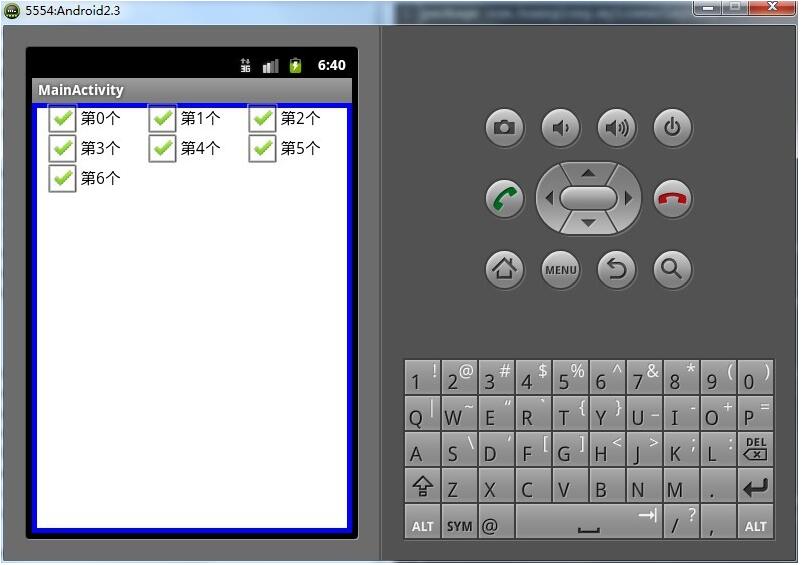
效果如下图:


以上就是本文的全部内容,希望对大家的学习有所帮助,也希望大家多多支持编程学习网。
织梦狗教程
本文标题为:android选项卡TabHost功能用法详解


基础教程推荐


猜你喜欢
- IOS应用内跳转系统设置相关界面的方法 2022-11-20
- Android多返回栈技术 2023-04-15
- iOS开发教程之XLForm的基本使用方法 2023-05-01
- Android开发使用RecyclerView添加点击事件实例详解 2023-06-15
- Flutter绘图组件之CustomPaint使用详解 2023-05-12
- 解决Android Studio突然不显示logcat日志的问题 2023-02-04
- android studio按钮监听的5种方法实例详解 2023-01-12
- IOS 播放系统提示音使用总结(AudioToolbox) 2023-03-01
- Android中的webview监听每次URL变化实例 2023-01-23
- Flutter手势密码的实现示例(附demo) 2023-04-11